If I had a pound for every time someone told my Mum to "just be patient" with my Dad, I could have quite easily funded my PAC™ training twice over!
I know it's well meaning, but it is, without exception, the single most useless piece of advice a family carer can be given. Stay with me because I want to explain why I think that way. I'm pretty sure that once you understand my reasoning it'll change how you ask for help and how you respond to those who offer such platitudes.
Patience isn't a skill - it's a finite state in the absence of know-how
"Just be patient" assumes the problem is your attitude. It assumes that if you simply tried harder to stay calm, to breathe, to count to ten, the difficult moment would resolve itself. Consequently the entire burden of the interaction is put on you, the carer and implies that when things go wrong, it's because you didn't try hard enough.
But patience isn't a skill. It's a state you can run out of and you will run out of it repeatedly, no matter how saintly a person you are, if nobody gives you anything else to work with. Patience without technique is essentially endurance and carers who are just enduring, day after day, are the ones who burn out, end up in tears in supermarket car parks, start to resent the person they love most in the world not because they're bad carers but because "be patient" was the only tool anyone ever handed them.
Here's what nobody tells families: there are specific, learnable, physical techniques that actually work in the moment when someone with dementia is distressed, confused or resistant to help and they have almost nothing to do with your emotional state. It has everything to do with how you approach, how you position yourself, how you use your voice, your hands and your timing.
Let's try…
This is the core of what Teepa Snow's Positive Approach to Care® teaches and it's the knowledge that not only transformed my own care delivery but also how my Mum cared for my Dad. Instead of "just being patient" when he refused to get washed, dressed or take medication, I taught Mum things like:
Approaching from the front, in Dad's line of sight, at his eye level or below but never from behind or to the side beyond his peripheral vision which the brain can register as threatening regardless of intention.
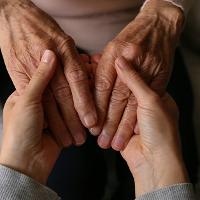
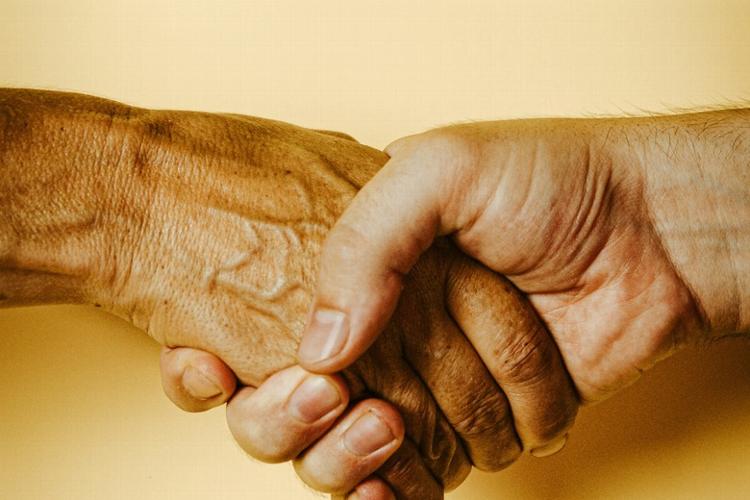
Offering her hand in the position of a handshake so Das could choose to take it, rather than simply reaching out for him to do something - the difference is a moment of control being taken from someone into a moment of control being offered.
Using short, single-step instructions instead of questions with too many options. "Would you like tea or coffee and do you want it in the red cup or the blue one and shall we sit in the kitchen or the lounge?" is five decisions when you fully break it down. A person with dementia is unable to process so much information given all at once.
Matching Dad's pace and energy rather than following her own. If he was moving slowly and speaking slowly, speeding up to "get things done quickly and efficiently" - my Mum's usual modus operandi with just about everything! - frequently resulted in an escalation of emotion and triggered a challenging situation. Slowing down, physically and vocally, calmed him almost every time.
None of these simple dementia care techniques demanded that Mum became more patient but they needed her to do something different. The change in outcome when she did take action was huge: fewer refusals, meltdowns, far less conflict and crucially, far less guilt on her part when things did go wrong because she understood she was working with a brain that genuinely couldn't process things the way it used to.
Effective dementia care techniques trump patience every time
This is exactly why I think "be patient" has to be retired as advice and why I'm so committed to what I do now. Family carers don't need extra resilience as most of them have that in spades already. What they do need though is know the why and then the how: practical, physical, in-the-moment skills that reduce the number of situations requiring endless patience in the first place.
If you're a family carer reading this and thinking "I wish someone had told me that three years ago," you're exactly who I built this business for. Whether it's a free ½ hour chat, one-off coaching session or a workshop with your local carer support group, know that there's a different way to care for individuals living with dementia and one that doesn't rely on you having infinite patience you don't have.
