When love isn't enough on its own
If you care for someone living with dementia, you've probably already discovered that love and patience on their own aren't magic ingredients that instantly stop challenging situations from happening. For example: your dad refuses to let you support him to have a wash; your wife pulls away when you reach for her arm; a simple question like "Did you eat lunch?" ends in tears or anger.
It's easy to assume these moments mean you're doing something wrong or that the person is being difficult. Teepa Snow's Positive Approach to Care (PAC™) offers a different explanation: the brain is changing and our approach has to change with it. Once family carers understand what the brain can and can't do anymore, many of what were daily battles become easier to manage.
This post explains what Positive Approach to Care is, the core techniques behind it and how families can start using it at home.
Who is Teepa Snow and what is PAC?
Teepa Snow is an American occupational therapist and dementia care expert whose decades of clinical work led her to found Positive Approach to Care, an organisation that trains family members, professional care partners and care communities. Her videos and workshops are known for showing, not just telling. She demonstrates real interactions, often playing the part of the person living with dementia so carers can appreciate the situation from the other side.
The philosophy rests on one central idea. People living with dementia are doing the best they can with the brain they have right now. Behaviours we might label as "difficult" such as resisting help with personal care, wandering, repeating questions or lashing out are usually a person's attempt to communicate a need or protect themselves from something that feels confusing or threatening.
Knowing this completely shifts the carer's job so instead of trying to make the person cooperate, PAC asks us to change what we do: how we approach, what we say, when and how we touch and our expectations. When the care partner adjusts, the person living with dementia more often than not responds with less fear and more trust.
The core principles of the Positive Approach to Care
1. Understand brain change
PAC starts with learning what dementia actually does to the brain, taught in an interactive way that neatly avoids the dreaded death by PowerPoint boredom! As different areas of the brain are affected, a person may struggle to follow fast speech, notice things happening to one side of them, recognise hunger or thirst or hold back strong emotions. Other abilities, such as rhythm, music, familiar phrases and long-held social routines often remain for a long time.
When you know what's changing and why, you stop expecting the impossible and start working with the skills that are still there. Someone who startles when you suddenly appear beside them may simply not have seen you coming.
2. Connect before you do
How you arrive matters as much as what you say and do. Teepa Snow's Positive Physical Approach™ is built on a simple idea: make a warm, unhurried connection with the person before you ask anything of them. The relationship comes first in every task, not as an afterthought, giving the person a chance to recognise you, feel safe and settle before anything else happens.
3. Offer touch that supports rather than controls
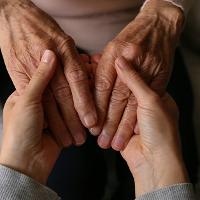
Hand-under-Hand® is Teepa's signature technique. It's a way of using touch that feels comforting and connecting and that lets you help with familiar everyday movements while the person still feels they're the one in charge.
It's also one of those skills that words alone can't really teach. Positioning, timing and pressure all matter and it needs to be demonstrated then practised, ideally with someone giving you feedback, before it can be used well and safely.
4. See the person, not the stage
Rather than labelling people by “stage”, PAC uses the GEMS® model, which compares a person's changing abilities to precious stones. There are six in total ranging from Sapphires, representing typical ageing, through to Pearls near the end of life. Every gem has value and each one needs a different kind of support. The model helps families focus on what the person can still do today and adjust their help to match, rather than trying to work with and dwelling on what has been lost in the moment.
What PAC looks like in everyday care
Imagine it's time for your father's shower and he says no. The old approach might be to explain why he needs it, remind him it's been three days or insist. Under PAC, you'd step back and look at what's happening. Is the bathroom cold? Is the running water loud? Does he feel embarrassed undressing in front of his child? Get curious and play detective.
Take a moment to connect warmly before you mention the shower. You'd use fewer words and more visual cues, perhaps offering a soft fluffy towel or holding up a flannel instead of describing the plan. If he still refuses, you'd let it go and try again a bit later. A refusal isn't a failure; it's information.
The same thinking applies to meals, medications, getting dressed and leaving the house. Slow down, show rather than tell, offer simple choices and give the person a meaningful role, such as setting the table or stirring the pot.
A kinder way forward
The heart of the Positive Approach to Care is respect. It asks us to stop seeing dementia only as loss and to notice the skills that remain. It reminds us that the person in front of us is still there, still feeling, still trying to connect.
You won't get it right every time and that's okay. Every small change in how you approach, speak and touch can reduce distress for both of you. Start with trying one technique this week, perhaps slowing down how you arrive and connecting before you mention anything else.
How to learn more
A good place to start is the Positive Approach to Care YouTube channel. That's where I began after a colleague recommended it. The videos are a great way to get a feel for Teepa's approach and see her techniques in action.
From my own experience though, watching videos can only take you so far. Skills like Hand-under-Hand rely on timing, positioning and body language that are hard to pick up from a screen. You really need to try them, get feedback and practise until they feel natural. That's exactly why I became a licensed Dementia Educator: so I could offer families and care teams live online and in-person training that makes these techniques work in real life.
